+86-15829664021
liangma0318@gmail.com
- All
- Product Name
- Product Keyword
- Product Model
- Product Summary
- Product Description
- Multi Field Search


Views: 0 Author: Site Editor Publish Time: 2026-07-31 Origin: Site
Procuring equipment for trenchless construction is a highly capital-intensive decision. It directly dictates your project timelines. It impacts environmental compliance. It also determines crew safety on the jobsite. You must choose your equipment partners carefully. Manufacturer selection goes far beyond reading initial spec sheets. Poor alignment often results in prolonged downtime. You face supply chain bottlenecks for replacement parts. You might also end up with mismatched equipment. This causes struggles in specific soil types or tight urban environments.
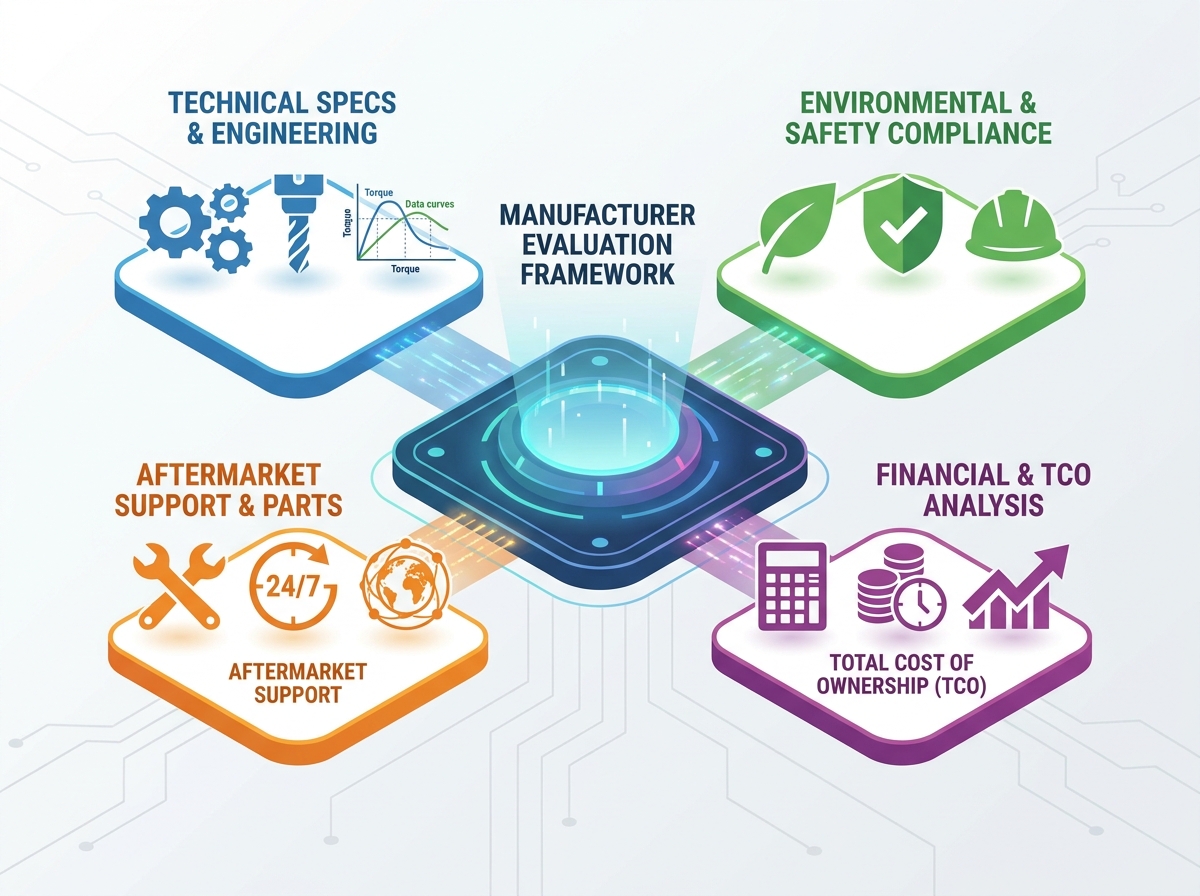
We built this guide to help you navigate these complex procurement challenges. We provide fleet managers and procurement teams with an objective evaluation framework. You will learn exactly how to shortlist a reliable underground directional drilling rig manufacturer. We cover technical viability, aftermarket support, and lifecycle performance. This ensures you select a partner capable of supporting your operational needs long-term. Read on to make a confident, profitable purchasing decision.
A reliable manufacturer must transparently align rig specifications (pullback, torque, footprint) with your most common project variables and soil conditions.
Aftermarket support, parts availability, and localized field service are often more critical to long-term profitability than the initial purchase price.
Environmental compliance (frac-out prevention, emissions, fluid management) must be built into the OEM’s engineering and training protocols.
Evaluating Total Cost of Ownership (TCO) requires analyzing fuel efficiency, tooling durability, and projected maintenance intervals over a 5-to-10-year lifecycle.
You must understand your own operational needs before engaging vendors. Start by assessing your jobsite realities. Document your standard operational parameters carefully. You should define your typical bore lengths. Calculate your average pipe diameters. Identify your prevailing geological conditions. Do you mostly drill through solid rock, sticky clay, loose sand, or cobble? These specific details dictate the exact machine specifications you require.
Next, evaluate your footprint and site constraints. Urban deployments require highly compact machine footprints. They also demand stringent noise reduction features. Strict city ordinances often restrict decibel levels. Cross-country pipeline installations present entirely different challenges. They prioritize maximum pullback force. They require massive mud capacity. You must match the physical machine dimensions to your typical working environment.
Finally, carefully assess your operator proficiency. Evaluate the current skill level of your crews realistically. Modern machines feature complex software systems. Manufacturers offering intuitive controls add massive value. Look for smart automation features. These features include automated carve modes and cruise control. Your vendor should also provide comprehensive training programs. Good training mitigates the learning curve. It significantly reduces early equipment damage caused by inexperienced hands.
Best Practice: Keep a detailed log of your last ten projects. Note the soil types, drill distances, and spatial limitations. Use this data as your baseline requirement document when speaking to sales representatives.
You need to scrutinize core engineering and performance metrics. Look closely at how the manufacturer balances thrust and pullback force. Compare this balance against rotational torque. You want verified testing data. Do not rely on theoretical maximums printed in glossy brochures. Ask vendors for real-world performance logs. A well-engineered underground directional drilling rig maintains torque even under maximum pullback strain.
Drilling fluid management remains equally important. Evaluate the integration of onboard mud pumps. Check the capacity of auxiliary mud systems. Efficient fluid management stabilizes the borehole during operations. It suspends cuttings properly. It also reduces premature wear on your expensive downhole tooling. Sticky clay requires different fluid volumes compared to porous sand. Ensure the onboard pumps can handle your required flow rates.
Do not ignore telematics and diagnostic technology. Assess the proprietary software included with the equipment. A credible equipment partner provides real-time data access. You should monitor drilling parameters remotely. Track overall machine health from your office. Look for systems sending preventative maintenance alerts. This software prevents catastrophic failures while working in remote fields.
Technical Capability Scoring Chart
Technical Metric | Baseline Requirement | Why It Matters in the Field |
|---|---|---|
Thrust/Pullback Balance | Verified field test data | Ensures the rig will not stall during long pullback operations in heavy soil. |
Fluid Pump Capacity | Scalable GPM (Gallons Per Minute) | Prevents borehole collapse by maintaining adequate hydrostatic pressure. |
Telematics Integration | Real-time remote diagnostics | Reduces unexpected downtime by triggering predictive maintenance alerts. |
Environmental regulations grow stricter every year. You must prioritize frac-out mitigation. Investigate the rig’s integrated pressure monitoring systems. The equipment must provide operators with highly precise downhole pressure feedback. This data helps prevent inadvertent drilling fluid returns. Frac-outs violate environmental regulations. They incur massive fines and ruin your company reputation.
Review emissions and sustainability features. Verify engine configurations meet your regional emission standards. Look for EPA Tier 4 Final compliance in North America. Check for EU Stage V certification in Europe. Ask vendors about alternative fuel compatibilities. You might need electric or hybrid models soon. These zero-emission machines prove vital if you bid on green infrastructure projects or indoor installations.
Operational safety requires careful review. Examine built-in safety features closely. Look for reliable strike alerts. These warn operators of live electrical cables. Test the automated lockout and tagout mechanisms. Check the ergonomic cabin designs. Good cabins reduce operator fatigue during long shifts. Alert operators make fewer dangerous mistakes.
Common Mistake: Treating safety features as optional upgrades. Upgrading to advanced strike alert systems always costs less than repairing a severed municipal power line.
Real-world profitability hinges strictly on uptime. The downtime cost can ruin a project margin entirely. Challenge the manufacturer on their parts fulfillment rate. Demand absolute supply chain transparency. You need critical replacement parts delivered overnight. Waiting weeks for a simple hydraulic fitting destroys your schedule.
Investigate their localized service networks thoroughly. Ask specific questions about dealer proximity. Does the OEM have certified dealer support nearby? Do they dispatch mobile field technicians in your primary operating regions? You need boots on the ground quickly when machines break. Remote phone support rarely fixes a blown hydraulic manifold.
Determine tooling compatibility early in the process. Check if the rig requires proprietary downhole tooling. See if it accepts industry-standard drill pipe, reamers, and sondes. Proprietary lock-ins severely inflate long-term operational costs. They limit your flexibility in the field. You want the freedom to source standard consumables from local suppliers.
Evaluate their training infrastructure. A reliable partner provides extensive onboarding. They offer modern simulator training for new hires. They deliver on-site operational support during your first deployment. They also supply ongoing technical education for your in-house mechanics.
Common Aftermarket Pitfalls to Avoid:
Assuming global brands have local parts inventory. Always verify the stock levels at your nearest dealership.
Ignoring the cost of proprietary drill pipe. Custom threading forces you to buy expensive replacements exclusively from the OEM.
Underestimating the value of mechanic training. Your in-house team needs factory certification to perform fast repairs without voiding warranties.
You must look far beyond initial capital expenditure. Build a robust lifecycle value model. Factor in daily fuel consumption rates under heavy load. Calculate the projected lifespan of common wear parts. Add up your routine preventative maintenance costs. This approach paints a true picture of actual equipment value.
Analyze the historical resale value next. Look at depreciation rates in the secondary market. Top-tier equipment retains significantly higher residual value. Cheaper rigs often depreciate rapidly. High resale value gives you better financial leverage. It makes fleet upgrades much easier down the road.
Scrutinize the warranty structure carefully. Read the fine print of both standard and extended warranties. Identify exactly what is covered. Look for coverage on hydraulics, engine components, and structural frames. Identify actions voiding the warranty. Using third-party drill fluids sometimes triggers strict void clauses.
Warranty Coverage Comparison Table
Coverage Area | Standard Warranty Expectation | Extended Warranty Benefits | Common Void Triggers |
|---|---|---|---|
Engine Components | 1 Year / 1000 Hours | Up to 3 Years / 3000 Hours | Using unapproved fuel additives. |
Hydraulic Systems | 1 Year Coverage | Full replacement on pumps/motors | Contaminated hydraulic fluid. |
Structural Frame | 3 to 5 Years | Lifetime limited warranty | Unauthorized welding or modifications. |
You need a structured approach for final selection. Disorganized purchasing leads to costly regrets. Follow a strict, standardized evaluation process. This ensures every vendor receives fair, objective scrutiny based on facts.
Follow these procurement steps:
Request Actual Field Demos: Demand an on-site demonstration. It must happen in conditions mimicking your actual jobsites. Avoid controlled proving grounds. Factory test tracks rarely reflect real-world geological challenges.
Conduct Rigorous Reference Checks: Request detailed case studies. Ask for contact information of current clients. Find peers operating similar equipment in similar soil conditions. Ask them specifically about parts availability. Question them about the manufacturer’s breakdown response time.
Build a Vendor Scorecard: Compile your findings into a standardized matrix. Weigh the technical specifications against aftermarket support. Score their environmental compliance capabilities. Rate their warranty comprehensiveness.
Perform a Contract Review: Inspect the service level agreements. Ensure the promised delivery dates include penalty clauses for late arrival.
This disciplined framework removes emotion from the purchase. It ensures you make an objective, logic-based final purchasing decision. It protects your capital investment.
Choosing a drilling equipment manufacturer requires building a long-term strategic partnership. You are buying an ongoing relationship, not just a massive piece of steel. Treat the procurement process as an investment in your company's future operational stability.
Prioritize robust aftermarket support and localized parts availability above all else.
Ensure rigorous environmental compliance features exist across the proposed fleet.
Build realistic lifecycle models instead of chasing raw spec-sheet maximums.
Demand real-world demonstrations in your prevailing geological conditions.
This disciplined approach ensures reliable project execution. It guarantees sustained fleet profitability over the coming decade. Take your time, evaluate thoroughly, and buy with absolute confidence.
A: Standard delivery windows usually range from 3 to 12 months. This depends heavily on rig size, custom configurations, and current market conditions. Supply chain realities dictate that larger, highly customized pipeline rigs require significantly longer lead times than compact urban models.
A: Yes. Top-tier manufacturers offer extensive modular upgrades. You can request specialized crawler tracks for sensitive turf. You can also specify advanced noise-reduction packages for urban environments. Some OEMs offer bespoke fluid pump configurations for unique soil conditions.
A: Standard industry practices include multi-tiered approaches. Manufacturers usually offer factory training sessions. They also mandate dealership on-boarding programs. Many provide advanced digital simulator resources. This allows operators to practice complex maneuvers safely before stepping onto a live jobsite.
A: Often yes, but caution is required. Using third-party downhole consumables like standard drill pipe is an industry standard. However, replacing internal hydraulics or engine components with unauthorized parts risks voiding your warranty. Always check the OEM warranty stipulations first.